고령 위암, 왜 늘어나나 Why Is Gastric Cancer Increasing Among Older Adults?
지난해 할머니 건강검진에서 위암 진단을 받았을 때 가장 답답했던 건 “나이 때문에 수술 위험이 크다”는 말이었습니다. 실제로 의료진과 상담하면서 알게 된 건, 단순히 나이만의 문제가 아니라 ‘노쇠’와 ‘근감소증’이라는 개념이 있다는 것. 75세 이상 환자들이 수술 후 회복 속도가 다른 이유를 이해하게 되면서, 수술 전 준비의 중요성을 실감했습니다. 이 글은 그 경험을 바탕으로 정보를 정리한 것입니다.

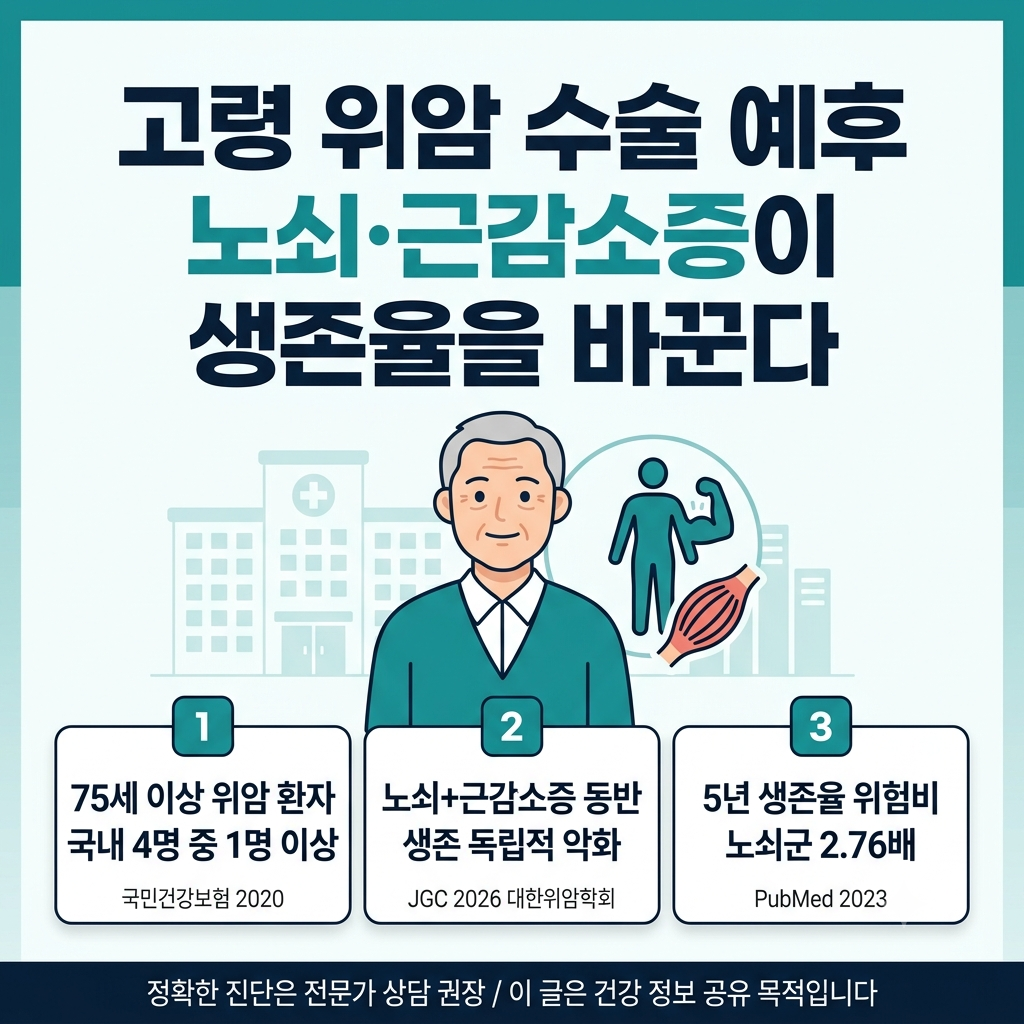
국민건강보험 통계에 따르면 2020년 기준 국내 위암 환자 4명 중 1명 이상은 75세 이상이다. 한국은 2025년 65세 이상 인구가 20%를 넘는 초고령사회에 진입했으며 노년기 위암 환자는 늘어나는 추세다. 진행성 위암으로 수술받은 75세 이상 고령 환자의 5년 생존율은 51.4%로 위암 2기 평균(70%)보다 낮다는 서울아산병원 공충식·고창석 교수팀 연구가 있다.
According to National Health Insurance statistics, as of 2020, more than one in four gastric cancer patients in South Korea were aged 75 or older. South Korea entered a super-aged society in 2025, with people aged 65 and older accounting for more than 20% of the population, and the number of older adults with gastric cancer continues to increase. A study by Professor Kong Chung-sik and Professor Ko Chang-seok’s team at Asan Medical Center reported that the 5-year survival rate among patients aged 75 or older who underwent surgery for advanced gastric cancer was 51.4%, which was lower than the average 5-year survival rate of approximately 70% for stage II gastric cancer.
노쇠란 무엇인가 What Is Frailty?

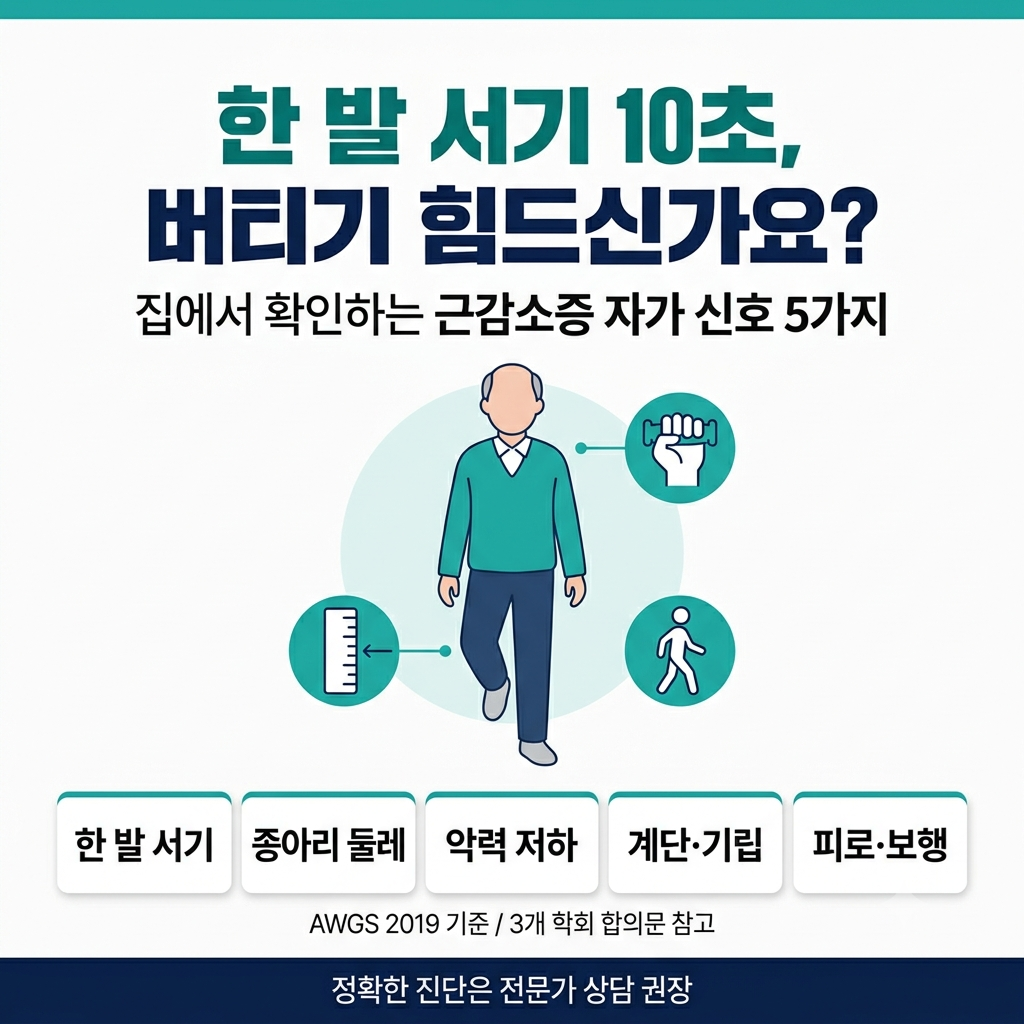
고령 환자 수술 예후에서 빠지지 않는 개념이 노쇠(frailty)다. 분당서울대병원 자료에 따르면 노쇠는 신체 기관이 노화로 기능이 떨어지면서 체중·근력이 감소하고 일상생활을 혼자 수행하기 힘들어진 상태를 뜻한다. 기운이 없고 식욕이 줄며 체중이 빠진다면 노쇠를 의심해볼 필요가 있다고 알려져 있다. Frontiers in Oncology 2022년 메타분석에서 노쇠가 있는 위암 위절제술 환자는 그렇지 않은 환자에 비해 장기 생존율이 유의하게 낮다는 결과가 보고됐다.
Frailty is an important concept when assessing surgical outcomes in older patients. According to information from Seoul National University Bundang Hospital, frailty refers to a state in which the functions of various organs decline with aging, accompanied by weight and muscle loss and difficulty performing daily activities independently. Symptoms such as low energy, reduced appetite, and unintentional weight loss may indicate frailty. A 2022 meta-analysis published in Frontiers in Oncology reported that gastric cancer patients with frailty who underwent gastrectomy had significantly lower long-term survival rates than those without frailty.
근감소증과 예후 Sarcopenia and Prognosis

노쇠의 핵심 원인 중 하나가 근감소증(sarcopenia)으로 근육량 감소와 함께 근력·신체 기능이 저하되는 상태다. 한국에서는 2021년 질환 코드(M62.5)가 제8차 한국표준질병사인분류에 포함됐다. 70대에 접어들면 30~40대 대비 근육량이 30% 가까이 줄어든다고 알려져 있으며(분당서울대병원), 고령 위암 수술 환자의 근감소증 유병률은 13.6~52.1%에 달한다는 체계적 고찰이 있다(Translational Gastroenterology and Hepatology 2023). 수술 전 근감소증이 있는 경우 장기 생존율이 낮다는 분석도 보고됐다.
One of the key factors contributing to frailty is sarcopenia, a condition characterized by a decline in muscle mass accompanied by reduced muscle strength and physical performance. In South Korea, sarcopenia was incorporated into the 8th revision of the Korean Standard Classification of Diseases in 2021 under disease code M62.5. It is widely reported that muscle mass may decrease by nearly 30% by the age of 70 compared with that in the 30s and 40s, according to information from Seoul National University Bundang Hospital. A systematic review published in Translational Gastroenterology and Hepatology in 2023 reported that the prevalence of sarcopenia among older patients undergoing gastric cancer surgery ranged from 13.6% to 52.1%. Other analyses have also reported that patients with sarcopenia before surgery have poorer long-term survival outcomes.
둘이 겹치면 어떻게 What Happens When Frailty and Sarcopenia Overlap?

노쇠와 근감소증이 동시에 있을 때 예후 악화는 더 뚜렷하다고 알려져 있다. Journal of Gastric Cancer 2026년 게재 연구(대한위암학회 지원)에 따르면 70세 이상 위암 위절제술 환자에서 두 조건이 동반된 경우 수술 후 결과와 생존이 독립적으로 더 나빠졌으며, 어느 한 조건만 있어도 생존율이 낮아지는 용량-반응 관계가 시사됐다. 65세 이상 위암 수술 환자 246명 분석에서 노쇠 지수가 높은 군의 3·5년 생존율 위험비는 각각 2.76, 2.26이었다(PubMed 2023).
When frailty and sarcopenia occur simultaneously, the deterioration in prognosis appears to be even more pronounced. According to a 2026 study published in the Journal of Gastric Cancer with support from the Korean Gastric Cancer Association, among patients aged 70 or older who underwent gastrectomy for gastric cancer, the coexistence of frailty and sarcopenia was independently associated with poorer postoperative outcomes and survival. The study also suggested a dose-response relationship, in which survival decreased as the number of these conditions increased. In an analysis of 246 gastric cancer patients aged 65 or older, those with higher frailty index scores had hazard ratios of 2.76 and 2.26 for 3-year and 5-year mortality, respectively, according to a 2023 PubMed-indexed study.
수술 전 평가 왜 중요 Why Is Preoperative Assessment Important?
이런 배경에서 수술 전 노인포괄평가의 중요성이 자주 언급된다. 분당서울대병원에서는 수술 전 노인포괄평가를 통해 노쇠·근감소증 위험을 미리 확인하고 환자·보호자에게 결과를 설명해 수술 준비와 합병증 대비에 활용하고 있다. 서울아산병원 연구에서도 저체중 환자는 정상 체중 대비 사망 위험이 1.45배 높았으며 수술 전 영양 상태 개선이 예후의 중요 요소로 제시됐다.
Against this background, the importance of comprehensive geriatric assessment before surgery is increasingly being emphasized. Seoul National University Bundang Hospital conducts comprehensive geriatric assessments before surgery to identify the risks of frailty and sarcopenia in advance. The results can then be discussed with patients and their caregivers and used to prepare for surgery and anticipate potential complications. A study from Asan Medical Center also found that underweight patients had a 1.45-fold higher risk of death compared with patients of normal weight, suggesting that improving nutritional status before surgery may be an important factor affecting prognosis.
미리 챙길 수 있는 것 What Can Be Done in Advance?
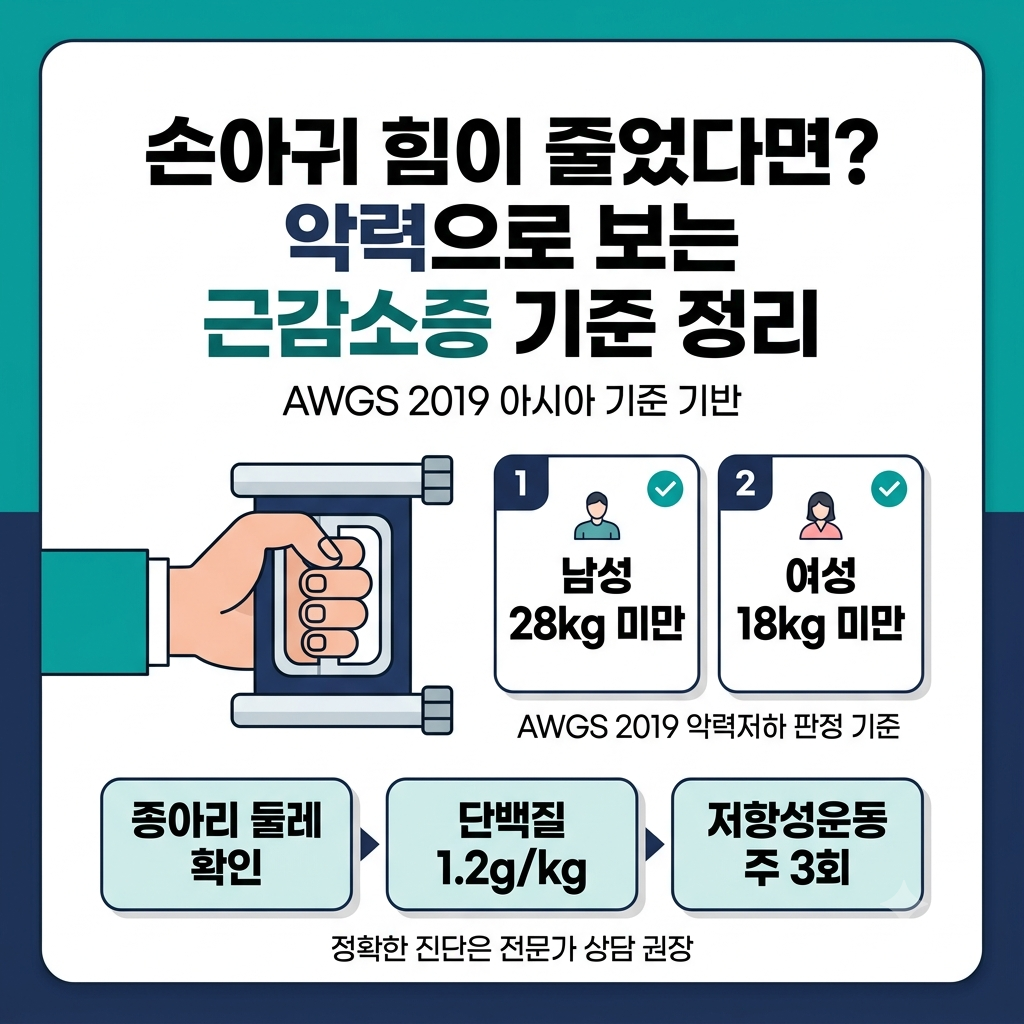
노쇠나 근감소증은 조기에 발견해 관리하면 개선 가능성이 있다고 알려져 있다. 분당서울대병원 자료에 따르면 전 노쇠 단계에서 식이요법과 운동 관리를 잘 하면 정상 회복 가능성이 높다고 한다. 하지 근력 중심 근력 운동·균형 운동과 체중 1kg당 1.0~1.2g 단백질 섭취가 권장되며, 만성질환·영양불량 상태라면 1.2~1.5g까지 늘릴 것을 권고하고 있다. 고령 위암 수술을 앞두고 있다면 담당 의료진과 노쇠·근감소증 상태를 상의하고 영양·재활 중재를 적극 활용하는 것이 도움이 될 수 있다고 여러 자료에서 언급되고 있다.
According to information from Seoul National University Bundang Hospital, individuals in the pre-frail stage have a relatively high likelihood of returning to a normal state when appropriate dietary and exercise interventions are implemented. Resistance exercises focusing on the lower-extremity muscles and balance exercises are recommended. Protein intake of approximately 1.0–1.2 g per kilogram of body weight per day is generally recommended, with intake of 1.2–1.5 g/kg/day suggested for individuals with chronic diseases or malnutrition, depending on their clinical condition. For older adults preparing for gastric cancer surgery, discussing frailty and sarcopenia with the treating medical team and actively considering nutritional and rehabilitation interventions may be helpful. Various studies and clinical resources emphasize the potential value of these interventions in preparing patients for surgery and supporting recovery.
정확한 진단·처방은 가까운 의료기관·전문의 상담을 권장한다. 이 글은 일반적인 건강 정보 공유 목적이며, 본인 또는 가족의 건강 상태에 맞는 정확한 사항은 반드시 전문가 상담을 통해 확인하길 바란다. 고령 위암 수술을 앞둔 분 주변에 계신다면 이 정보가 도움이 됐나요? 비슷한 경험이나 정보 있으신 분은 댓글로 공유해 주세요.
If you or a family member is preparing for gastric cancer surgery at an older age, it may be worthwhile to ask the medical team about frailty, sarcopenia, nutritional status, and physical function before surgery.
For accurate diagnosis and treatment, consultation with a qualified healthcare professional or an appropriate medical institution is recommended. This article is intended for general health information and educational purposes only. Specific recommendations should always be confirmed with a healthcare professional based on the individual’s medical condition.
If you know someone who is preparing for gastric cancer surgery in older age, was this information helpful? If you have similar experiences or useful information, please feel free to share them in the comments.
#고령위암수술 #위암예후 #노쇠 #근감소증 #위암생존율 #고령암환자 #노인포괄평가 #위암수술위험요인 #위암고령환자 #근감소증예방
#GastricCancerSurgery #GastricCancerPrognosis #Frailty #Sarcopenia #GastricCancerSurvival #OlderCancerPatients #ComprehensiveGeriatricAssessment #GastricCancerSurgeryRiskFactors #GastricCancerInOlderAdults #SarcopeniaPrevention